Honors Program Students Defend Their Research Tackling Prisoner Wellbeing and Reintegration in Lebanon
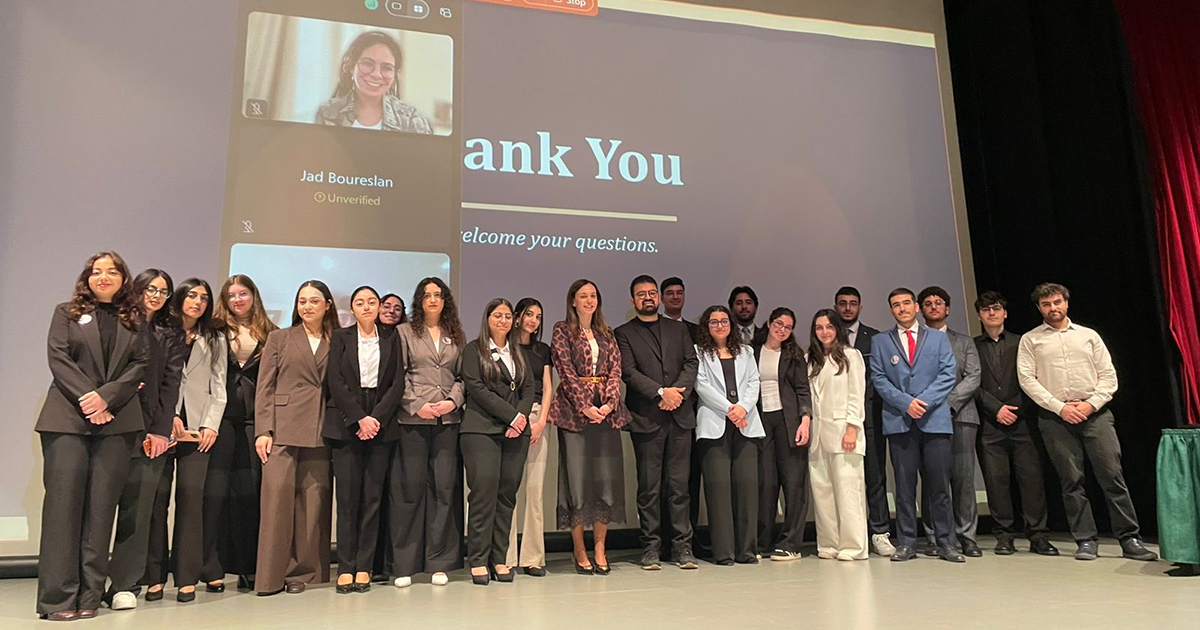
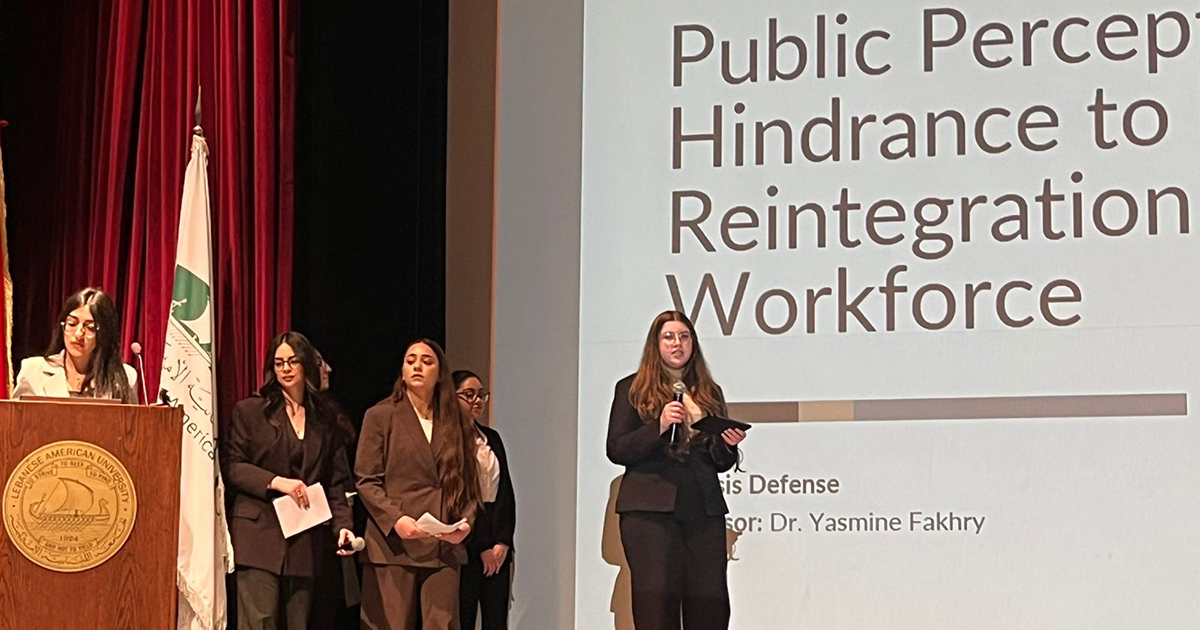
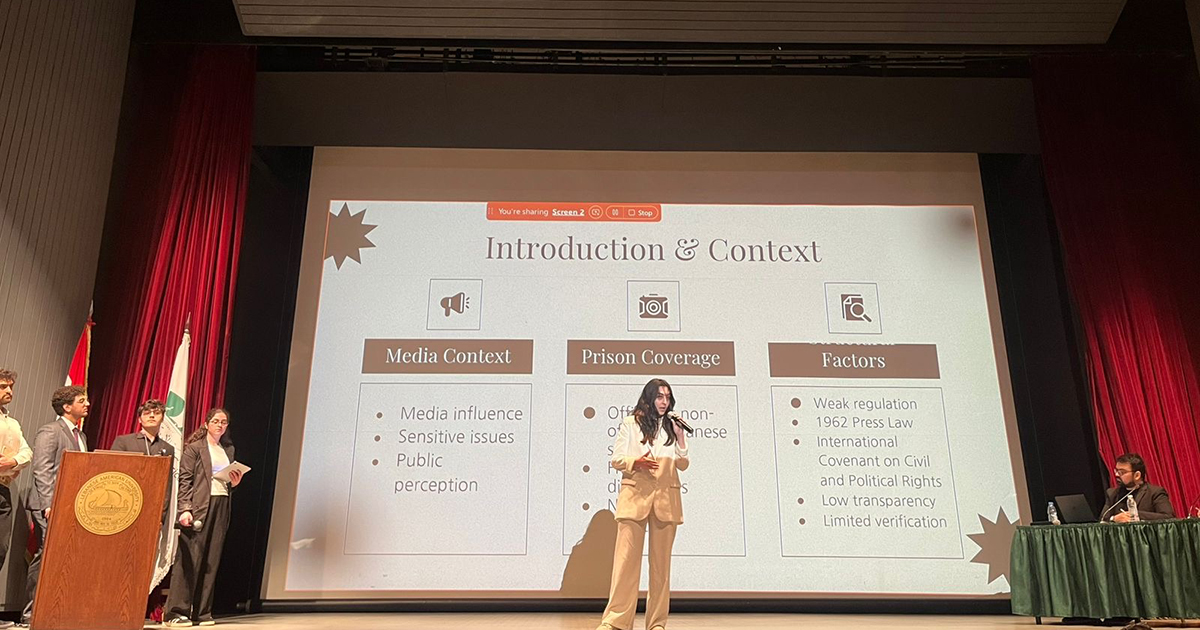
On April 23, 2026, 24 students in the Honors Program enrolled in LAS 499H Interdisciplinary Capstone Project at the School of Arts and Sciences (SoAS) showcased their research during their public Oral Defense. Their research tracks revolved around the theme Beyond Walls: A Multidisciplinary Inquiry into Prisoner Wellbeing and Reintegration in Lebanon, highlighting a range of perspectives on incarceration and rehabilitation.
Organized by Dr. Yasmine Fakhry, part-time faculty member and senior visiting fellow at the Institute for Migration Studies and the Institute for Social Justice and Conflict Resolution at LAU, this event was the second part of a broader initiative to reshape public perceptions of prisoners in Lebanon through students’ research. By emphasizing inmates’ vulnerabilities and lived experiences, the capstone project encourages a more humane, evidence-based approach to prison reform while equipping students to advocate for meaningful change and societal impact.
Taking the stage at the Irwin Hall Auditorium in LAU’s Beirut campus, four teams of students presented their findings to an audience of key attendees from various NGOs, including the Reverend Farid Lahoud, executive director of Aumônerie Générale des Prisons au Liban; Lara Chammaa, program coordinator at SIDC; Elie Aaraj, executive director of MENAHRA; social workers Rhea Abou Nader and Nada Abbani from Mouvement Social; and Sany Jabbour and Rana Younes, program director and social worker, respectively, at Dar Al Amal.
Also present were Executive Director Myriam Sfeir and Senior Deputy Director Carole Khater of the LAU Arab Institute for Women; Dr. Sami Baroudi, assistant dean of SoAS, and Dr. Hussein Hassan, director of academic compliance; as well as alumni and current students, reflecting the institutional significance of the event.
Each of the four teams tackled a research track focused on a different challenge: One group examined the limited opportunities for skill development among inmates, while another explored how societal perceptions can hinder reintegration into the workforce. The third team analyzed media portrayals of prisons in Lebanon, and the fourth investigated the structure and limitations of the Lebanese juvenile correction system. Despite the obstacles posed by the recent conflict, the students had carried out in-depth investigations using diverse methodologies.
Their presentations outlined the full scope of their research, including objectives, methods, ethical considerations, and Institutional Review Board (IRB) processes. Drawing on their findings, the students proposed a range of policy recommendations aimed at improving reintegration outcomes and supporting prisoners’ transition back into society.
Across the projects, a common theme emerged: The need for greater societal acceptance and institutional engagement in rehabilitation efforts. The students underscored the role that policymakers, employers, families and society at large can play in facilitating successful reintegration, demonstrating how student-led research can contribute to public discourse and policy development.
The evaluation panel included Nour Wehbe, a clinical psychologist and lecturer at LAU, and Fadi Hachem, an international human rights lawyer and university lecturer. Both commended the students for their analytical rigor, data-driven approach and strong presentation skills, while offering constructive feedback to further strengthen their work.
Overall, the event showcased an encouragingly high level of scholarship that reinforced the university’s position as a center for impactful research and highlighted the students’ capacity to drive informed social change.